Showing posts with label hyundai. Show all posts

Tuesday, March 13, 2012

2012 Hyundai Sonata Hybrid Review

Overall, the 2012 Hyundai Sonata Hybrid cars only affordable medium-large. Test driver as there is almost no performance trade-off compared to the Sonata just gas. If you are shopping for a stylish hybrid, the automotive press says you can not get any better than the Hyundai Sonata Hybrid.
South Korean car manufacturer is calling this latest generation Sonata Hybrid has a unique characteristic, which can be operated by an electric motor, the machine can be used konvesiaonal or even both.Meanwhile, the Sonata Hybrid is different from other hybrid cars the starter generator Sonata Hybrid has been modified and when the battery is fully charged, the sedan is capable of racing speeds up to 99.2 per hour.
Furthermore, Hyundai claims that the latest generation Sonata Hybrid could consume the fuel reaches 39 miles per gallon on the highway road, while 37 miles a gallon on the road for a lot of obstacles, such as urban roads. This car is claimed to be 40 percent more efficient than the previous generation. They are four-cylinder engine has been recalibrated for 2012 and is now even more fuel efficient is better to provide the best in class fuel economy. In fact, in 2012 Sonata GDI led the entire middle segment (non hybrid) in the city (24 mpg) highway (35 mpg) and combined (28 mpg) fuel economy, while the Sonata 2.0T is now achieving 34 mpg highway, up from 33 mpg in model year 2011.

2012 Hyundai Sonata Hybrid entering the 2012 model year with more and more, technology offerings include safety and comfort of the Blue link, HD Radio technology and the new seven-inch touch screen navigation. Add it all and there is no reason why Sonata is one of the best shopping in the U.S. automobile


Standard Blue Link - safety, health telematics and infotainment systems. Sonata GDI now leads the entire medium car segment (non-hybrid) on all fuel economy numbers - city, highway and combined With a choice of 2.4 liter I4 engine native GDI, 2.0-liter I4 turbo engine or a 40 mpg hybrid, the Sonata offers a variety of fuel-efficient powertrains Three-piece panoramic sunroof is now standard on the Sonata Limited The new seven-inch touch screen navigation with HD Radio Technology Rear backup camera is available in the SE with Sunroof and Navigation Package.

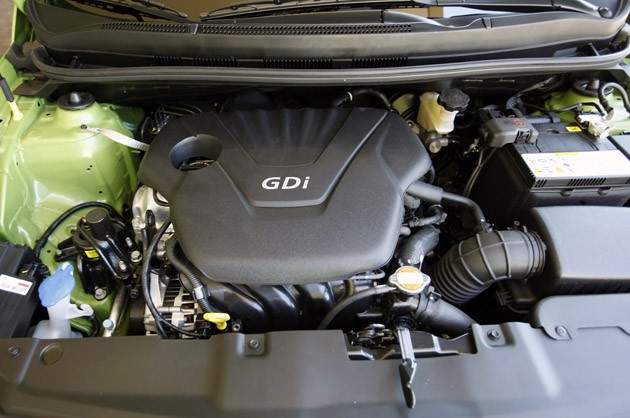
Sonata was launched with the original GDI Theta II 2.4-liter four-cylinder engine with the fuel system Direct-Injection Gasoline delivery (GDI), which contributes to improved fuel efficiency and lower emissions. The road is shorter, more direct than the fuel delivery, allowing for greater control of fuel mixture at the optimum time, thus increasing efficiency. Fuel is injected by a camshaft-driven pump, high pressure operating at pressures up to 2175 psi. Direct injection also uses a higher compression ratio of 11.3:1 normal for increased power. The pistons are "dished" to increase the efficiency of combustion in the cylinder. This powerplant gives the best fuel economy in its class and best-in-class four-cylinder horsepower and torque in its class.

Sonata provides an impressive lead segment city/35 mpg 24 mpg fuel economy rating highway/28 combined with either a manual six-speed automatic transmission with SHIFTRONIC ®. Horsepower and torque ratings for the Theta II GDI is 198 horsepower and 184 lb.-ft. torque. In SE trim, which includes standard dual exhaust, engine delivering 200 horsepower and 186 lb.-ft. torque. This high-tech, all-aluminum, 16-valve engine features Continuously Variable Valve Timing Ganda (DCVVT) and Variable Induction System (VIS) for better engine breathing. A version of this engine also meets Partial Zero Emission Vehicle (PZEV) standards.

With the 2.0-liter Theta II turbocharged GDI, 2012 Sonata offers an unprecedented combination of segment leading fuel efficiency and power - with a rating of 34 mpg highway, 274 horsepower at 6,000 rpm and 269 lb-ft of torque from 1800-4500 rpm with regular fuel. The 2.0T Sonata provides an outstanding 22 mpg city and 34 mpg highway. Hyundai's turbocharged engine equipped with twin-scroll turbocharger that when combined with the GDI system results in instantaneous power delivery. 2.0T engine is available in SE and Limited trim levels, the 2.0T SE adding a temperature control system is fully automatic upgrade, and the Limited adds 18-inch hyper silver alloy wheels SE, dual exhaust, and steering wheel-mounted paddle shifters.

Heart of the technological breakthroughs of 2012 Sonata Hybrid Hybrid's incredible Blue Drive lithium polymer battery pack. Simple hybrid powertrain Hard Blue with decoupling the engine, significantly reducing the amount of energy required to maintain highway speeds, so the estimated outstanding 40 mpg highway rating of fuel, the best of any mid-size hybrid sedan on the market.

Hyundai Sonata's commitment to create a highly efficient fuel continues with a six-speed automatic transmission with manual control SHIFTRONIC or transaxle six-speed manual standard.

When it comes to transmissions, gears more clearly better. The addition of the sixth gear enables closer spacing between gear ratios providing a better balance of performance and fuel economy while the overall width of the gear ratio helps deliver strong acceleration.

The gearbox has three planetary gearsets and a unique flat torque converter which shortens the overall length by 0.47-inch unit. Four different pinion improve durability and further minimize size.

The Hyundai Sonata is one of only two cars on the market That both have received a Top Safety Pick designation from the Insurance Institute for Highway Safety and a five-star overall safety rating from the federal government under its new crash-test procedures. Read more about the government's new tests

Monday, March 5, 2012

Hyundai Veloster 2012

In 2012 the Korean car manufacturer Hyundai is ready to launch a new variant with the name of Hyundai Veloster 2012.Hyundai Veloster ready to compete with the Honda CR-Z.


With space to add a larger car cabin and comfort. Even the new flagship is able to penetrate 40 miles per gallon on the highway. Hyundai Veloster hatchback coupe and a functional combined with 3 doors. Equipped with Gamma 1.6-liter 4-cylinder, is a variant of Hyundai's smallest engine that uses gasoline direct injection (GDI).


Gamma engine is capable of producing 138 horsepower at 6300 rpm and maximum torque of 123 lb.-ft. at 4850 rpm. GDInya use this feature Dual Continuously Variable Valve Timing, gas control, the roller chain, variable induction and innovative anti-friction coating CRN Physical Vapor Deposition (PVD) and Diamond Like Carbon coating (DLC). Hyundai is committed to making Gamma engines achieve high fuel keiritan level, combined with 6-speed manual transmission and Automatic. Engineer for the environment. Extensive computer modeling and mapping of powertrain performance is used to modify the engine and transmission control, giving you enhance real-world fuel economy of up to 7% based on internal tests.


Innovative anti-gravity device. Each Veloster equipped with a Double Clutch Transmission EcoShift equipped with a standard Hillstart Assist Control. Features inspiring confidence is designed to minimize rolling backwards when starting from a stop on the steep ascent.

SAFETY

Airbags
Even took us on an extreme safety. Six airbags with Occupant Classification System Home, high tensile strength steel and Vehicle Stability Management system standard on all Veloster sophisticated.

Vehicle Stability Management (VSM)
Vehicle Stability Management system that coordinates Veloster Electronic Stability Control (ESC), Traction Control System (TCS), plus anti-lock braking system (ABS) and Electronic Brake-force Distribution (EBD) with Brake Assist to create an integrated security system is active for help you avoid accidents.

Electronic Stability Control (ESC)
One of the three elements in Veloster Vehicle Stability Management system, Electronic Stability Control system uses sensors in each wheel and the wheel to compare where you want to go to where the car is heading. If the difference between the two is detected, Electronic Stability Control slows the appropriate wheel to steer the car and helps you stay on track.

Traction Control System (TCS)
Working closely with the ESC, TCS limit the power and applies brakes to individual wheels to reduce the occurrence of wheelspin, and route power to the wheels with most traction.

Anti-lock braking system (ABS)
Emergency braking maneuver can cause the wheels to lock and skid, resulting in loss of steering control exactly when you need it. Anti-lock Braking System (ABS) helps prevent the possibility of restrictions on the wheel under hard braking, rapid pulse and brakes to help you maintain steering control when you stop.

Electronic Brake-Force Distribution (EBD)
Helps the driver maintain control of confidence in difficult braking situation, Electronic Brake-force Distribution (EBD) balances braking forces at each wheel vehicle depending on passenger weight and cargo carrying vehicles.

Brake Assist
Brake Assist detects emergency braking assist and ensure maximum braking force is applied immediately to minimize stopping distances.

Sunday, March 4, 2012

2012 Hyundai Elantra Sedan Review

After a complete redesign last year, Hyundai Elantra 2012 using an "Active Eco System" with a fuel savings of up to 7 percent. Hyundai Elantra 2012 was ranked 2 of 41 Affordable Small Cars. Hyundai Elantra is quite merged in sales. After a complete redesign last year, Hyundai Elantra looks better in 2012, and is important for many of the segments are not usually known for the visual pleasure.


With a 1.8-liter engine produces power are commendable for its class and type of fuel saving is achieved only with its competitors when it comes to high efficiency and also improve keiritan further fuel for 2012 thanks to a new system known as Eco Active. When the driver to select this mode, the Elantra's automatic points with the use of the transmission shift and throttle response tailored to improve fuel economy up to 7 percent.

Inside the cabin, passengers are greeted with a bold design of the dashboard and controls are still easy to use. Elantra also be loaded with comfort features and the types of electronic indication of a luxury car. In addition to the lack of rear headroom for tall people, the cabin is generally quite broad.


Every Hyundai Elantra 2012 is front-wheel drive and come standard with engine 1.8-liter four-cylinder that produces 148 horsepower and 131 pound-feet of torque. Vehicles sold in California-emission states have partial zero-emission vehicle (PZEV) versions of this engine, which lowers the output of 145 hp and 130 lb-ft of torque. On GLS, standard six-speed manual transmission and six-speed automatic is optional. The Limited comes standard with an automatic.

In Edmunds performance testing with non-PZEV engine, the Elantra Limited go from zero to 60 mph in 9.4 seconds - slightly slower than average. No matter which engine / transmission combo you choose, you'll end up with a very impressive fuel, though. EPA estimates are 29 mpg city/40 mpg highway and 33 mpg combined.

2012 Hyundai Elantra list of standard safety features include traction and stability control, ABS disc brakes, active front head restraints, front seat side-impact airbags and side curtain airbags. In Edmunds brake testing, an Elantra Limited takes 125 feet to stop from 60 mph - a good distance to the segment.

In Insurance Institute for Highway Safety crash tests, Elantra is a top score of "Good" for frontal-offset performance of the year, side impact and roof-strength test.


Elantra interior which has a curved center stack and climate control style that gives a little extra flair while still being easy to use. Attractive design and materials, while not quite the best in its class, at least have a rich look to them. With the available high-end features such as leather, heated front and rear seats, excellent navigation system and rearview camera, you can even complete an Elantra to near-luxury levels.

In general, the Elantra offers more space than you'd expect from a compact car. Abundant headroom in the front for the 6-footer and the steering wheel is slightly smaller in diameter than normal, which increases the sense of space in front. The rear seats are good for children and even most adults, although the vertically gifted will find abundant legroom and headroom thanks to the lack of the mixture. This Elantra has a huge trunk with 14.8 cubic feet of cargo space, a benefactor to this segment. 60/40-split pass-through is also quite large.

Elantra is a good value, but no review label Elantra fun to drive like the Mazda3 or Honda Fit. But they said the 2012 Hyundai Elantra make a great daily driver. After seeing all these qualities, many members of the automotive press says Elantra is one of the best affordable small cars on the market. Edmunds agrees, and says, "Thanks to the head-turning styling, fuel-efficient engines and a long list of standard safety features and a choice of upscale, Hyundai Elantra in 2012 is a top pick for a small sedan."

Saturday, March 3, 2012

2012 Hyundai Accent Hatchback Review

2012 Hyundai Accent is supported by a single-engine direct injection 1.6-liter four-cylinder-powered 138 horsepower and 123 pound feet of torque. Accent front-wheel-drive is available with either a standard six-speed manual or optional six-speed automatic transmission with the fuel economy increase certainty Eco. In performance testing , Accent GLS with automatic change from zero to 60 mph in 9.8 seconds - fast enough time.

Estimated EPA fuel economy with this transmission is 30 mpg city/40 mpg highway and 33 mpg combined is usually impressed with the automatic transmission. Combined mileage estimates are 34 mpg with the manual.

2012 Hyundai Accent with anti-lock brakes (ABS) that includes Electronic Brake Force Distribution (EBD) and Brake Assist (BA) are also included. EBD check the result of a car load weight distribution and apportions braking force between front and rear axles to maximize stopping ability. BA to ensure that the braking force is applied in the case of a panic stop.


2012 Hyundai Accent will be offered in three versions. The four-door GLS reasonable, which is equipped with a versatile five-door sporty five-door GS and SE. The entry level Hyundai Accent three-door model has been discontinued 2012th

2012 Hyundai Accent GLS came out with two interior colors gray or beige. Five-door GS and SE trim out the interior of gray or black monotone interior. All Accents have a cloth like a pillar trim made of fibrous tissue and volcanic rock for a premium look and feel.

Hyundai Accent bold choice of exterior color palette of each light and dark colors together with Century White, Ironman Silver, gray Typhoon, Ultra Black, Boston Red, Mocha Bronze, Marathon Blue, Clearwater Blue and natural electrolytes.

Standard interior 2012 Hyundai Accent has many alternatives to it, include: front pretensioners, front active headrests, adjustable headrests for all seats, tachometer, cabin air filter, power door locks, four speakers, tilt steering wheel, driver's seat armrest , front door map pockets, front passenger seat back pocket, 60/40 split folding rear seats, two mirrors VAINNESS, maps, dome and cargo lights, six-way adjustable driver seat with height adjustment, two-speed intermittent front wipers, glass paint, rear defroster with timer, air conditioning, AM / FM / Satellite Radio/CD/MP3 audio system with tweeters, iPod / USB additional input and roof-mounted antennas.

Along with expanding trail takes a new dimension in the 2012 Hyundai Accent in the country of the subcompact segment to the official EPA class "compact". Most of the extra space is Accent comes from the rear seat space and legroom make the ride more comfortable rear seat for even a 6-foot passenger. Sloping roofline does not eat into the available space, however, and the fifth passengers will find rear seat in the middle which is useful only when you run the left.


Although the front seats are roomy fit, the higher the driver may regret the lack of telescopic steering wheel. The combination also has a rear view is compromised. But the whole dashboard Accent patterned upholstery fabrics and updated, consoles, trim and gaps contribute to the feel of an exclusive storage of the car for this class.

Accent then have a relatively large trunk to 13.7 cubic feet. Four-door hatchback, meanwhile, offers 21.2 cubic feet of cargo volume with rear seats and 47.5 cubic feet when folded.

All 2012 Hyundai Accent comes with a long list of standard safety features, including antilock disc brakes with brake assist, stability and traction control, active front headrests, front seat side airbags and side curtain airbags.

In Edmunds brake testing, Accent stops from 60 km / h 123 m, average distance from the car class.
In government crash tests have Accent four out of five stars for overall crash protection and the amount of frontal protection as a whole. Insurance Institute for Highway Safety gave the highest ratings Accent "Good" in frontal offset test the strength and the ceiling.

Thursday, February 16, 2012

Hyundai i30


Hyundai i30. if before a new Hyundai car show they i30 C-segment in the form of sketches, then now is the South Korean manufacturer released an official photograph of the prospective challenger to the Ford Focus and Honda Civic that looks more sporty than lawasnya version.

The photo shows the outside of the i30 as a whole, the design clearly terlhat 'Fluidic Sculpture' typical global Hyundai products very dominant.

Look at the shape of its front fascia similar to the local Grand Avega or hatchback i20. In addition, the appearance of this design also reminds us of their new coupe form, Veloster. From the side, four-door look masculine figure with a dynamic body lines.

Compared to previous generations, the latest figure of i30 offers a new look that has a difference in the trapezoid grille, fog lamp and headlamp houses that offer a fresh look.

While on the machine, the second-generation Hyundai i30 complement this with two petrol engines, the 1.6-liter GDI (140 hp) and 1.4-liter (100 hp). In addition, two diesel engines that is 1.4-liter CRDi (90 hp) and 1.6-liter CRDi (126 hp).

Thursday, April 29, 2010

Hyundai Santa Fe 2010

It's human nature: Everyone wants to feel like a smart shopper -- like they've discovered a little-known product that delivers big-time bang for the buck. Perhaps something along the lines of the 2010 Hyundai Santa Fe, for example. While this affordable midsize crossover has struggled to achieve household-name status, a growing number of savvy buyers in recent years have found that the Santa Fe has some distinct advantages over its higher-profile competitors. Now, a few key improvements promise to make the 2010 model just that much more attractive.
While the Santa Fe's freshened exterior styling may be the most obvious change, the big news here is actually under the hood. The base engine is now a 175-horsepower 2.4-liter four-cylinder that replaces last year's 185-hp 2.7-liter V6. It's paired to a new six-speed automatic transmission, and the combination provides significantly better fuel economy as well as quicker acceleration The optional 276-hp 3.5-liter V6 is also new; it, too, provides better performance and fuel economy compared to last year's 3.3-liter V6.
The Santa Fe's already long list of standard comfort and convenience features also grows a little longer for 2010. Some desirable extras -- like leather upholstery and a sunroof -- are still available only on the top-of-the-line Limited trim level, but Bluetooth hands-free cell phone connectivity, steering-wheel-mounted audio controls and a USB audio jack have now trickled down to become standard across the model lineup. The optional touchscreen navigation system is also now offered on all three trim levels.
One notable deletion from the 2010 Hyundai Santa Fe's options list is the third-row seat. While going from a seven- to a five-passenger interior may put off some buyers, we don't consider it a great loss because that way-back seat was so cramped and difficult to access it was really only fit for small and nimble children.
While the Santa Fe has a lot going for it, it's not right for everybody. Those in search of a sportier driving experience would likely be happier with the Mazda CX-7 or Nissan Murano. If you're one of those folks who really needs a third-row seat, we'd suggest you check out roomier seven-passenger crossovers like the Chevrolet Traverse or Toyota Highlander.
That said, when you put these improvements together with an affordable MSRP, top crash test scores and a generous 10-year/100,000-mile powertrain warranty, the Santa Fe begins to look like a pretty smart purchase indeed.
For Pricing information, see our Pricing page.
Body Styles, Trim Levels, and Options
The 2010 Hyundai Santa Fe is a midsize crossover SUV that's offered in three trim levels: base GLS, sporty SE and top-of-the-line Limited. The entry-level GLS comes relatively well-equipped with 17-inch alloy wheels, heated side mirrors, rear privacy glass, air-conditioning, cloth upholstery, cruise control, a trip computer, full power accessories, 60/40-split-folding rear seatbacks and a six-speaker CD stereo with satellite radio and auxiliary audio and USB jacks.
The midrange SE model adds 18-inch alloy wheels, automatic headlights, foglamps, a roof rack and a rear spoiler. Cabin upgrades include unique cloth upholstery with leather inserts, a leather-wrapped steering wheel/shift knob, a power driver seat and an auto-dimming rearview mirror with compass.
Spring for the Limited and you get a sunroof, dual-zone automatic climate control, leather upholstery, heated front seats and a premium Infinity audio system with a six-disc CD changer. The Limited's sunroof and audio system are optional on the GLS and SE, as are heated front seats (SE only) and a navigation system with rearview camera.
For more Style information, see our Compare Styles page.
Powertrains and Performance
The 2010 Hyundai Santa Fe GLS and Limited come standard with a 2.4-liter four-cylinder that puts out 175 hp and 169 pound-feet of torque. A new six-speed manual transmission is standard in the GLS, while a new six-speed automatic is optional and standard with the Limited. All-wheel drive is optional. EPA fuel economy estimates range from 19 mpg city/26 mpg highway and 22 mpg combined for front-wheel-drive models equipped with the manual gearbox to 21/27/23 mpg for all-wheel-drive versions fitted with the automatic.
A 3.5-liter V6 that's rated at 276 hp and 248 lb-ft of torque is optional on the Santa Fe Limited and standard for the SE. The six-speed automatic is the only transmission offered here. V6 mileage estimates hardly dip from the four-cylinder, with an estimated 20 mpg city and 26 mpg highway.
For more Performance Data, see our Specifications page.
Safety
Electronic stability control, antilock disc brakes, active front head restraints, side-impact airbags for front seat passengers and rollover-sensing side curtain airbags are all standard on the Santa Fe. In government crash testing, the 2010 Hyundai Santa Fe earned perfect five-star ratings in both frontal and side impacts. Likewise, the Insurance Institute for Highway Safety awarded the Santa Fe its highest possible rating of "Good" in both frontal-offset and side-impact tests.
For more Safety information, see our Safety page.
Interior Design and Special Features
The Santa Fe's passenger cabin offers more than you might expect from a value-priced vehicle. The interior features attractive styling and quality materials that give it an upscale feel, especially on Limited models. A number of high-end standard features and options, including a navigation system with rearview camera, add to the feeling that you're somehow getting more than you paid for.
Some buyers may find it hard to get comfortable behind the wheel because of the overly high seating position and short bottom cushions that offer taller drivers minimal thigh support. The second row is another story, however, as it offers an above-average level of comfort.
The interior is also relatively cargo-friendly, with 60/40-split rear seatbacks that can be folded down to make a flat load floor. Maximum cargo area is 78 cubic feet, a number that's on par with comparably sized crossovers.
For more Interior Features information, see our Specifications page.
Driving Impressions
On the road, the 2010 Hyundai Santa Fe offers predictable if not exciting handling. The ride quality is generally good, though models fitted with the larger 18-inch wheels tend to be a bit harsh on rough pavement.
While we understand the thinking behind dumping the outgoing model's uninspiring 2.7-liter V6 for the much less thirsty new four-cylinder, the real-world fuel economy advantage it offers is negligible. If you can swing it, the new 3.5-liter V6 is the way to go.

Monday, April 5, 2010

Hyundai Sonata Hybrid 2011

2011 Hyundai Sonata Hybrid Front Three Quarter
There is no doubt that the all-new 2011 Hyundai Sonata is a hugely important vehicle to the Korean automaker. Combining a swoopy new exterior with performance that rivals the best the midsize sedan segment has to offer, the all-new Sonata is out to increase market share in one of the hottest-contested classes in the U.S. Now, at the 2010 New York Auto Show, Hyundai has unveiled the requisite eco-friendly Sonata variant -- the Sonata Hybrid.
 
Contrary to many hybrid variants of existing models, Hyundai has actually made quite a few visual changes to the Sonata Hybrid's exterior. Among the list of equipment unique to the hybrid version of the Sonata are the headlights and taillights, bumper fascias, rocker panels, front grille, 'eco-spoke' wheels, air dam and side sills, badging and paint color. Sure, some of those changes are purely cosmetic, but Hyundai says that many are functional, making the Sonata Hybrid more aerodynamic and lowering its drag coefficient to a slippery 0.25 -- the same as the Toyota Prius.
2011 Hyundai Sonata Hybrid Rear
The 2011 Sonata Hybrid marks the first production use of Hyundai's Hybrid Blue Drive technology -- a proprietary platform that we've seen in prototype form for some time now. As a full parallel hybrid drivetrain, Blue Drive can operate independently on either its 169-horsepower 2.4-liter gasoline engine or its 40-horsepower electric motor, with total overall power listed at 209 horsepower and 195 pound-feet of torque. In sharp contrast to most of competition, which employ CVTs for their hybrids, the Sonata Hybrid utilizes the automaker's in-house compact six-speed automatic transmission with electric oil pump, which Hyundai says offers similar economy while retaining a more conventional shift feel that resonates better with customers

2011 Hyundai Sonata Hybrid Front End
Another key feature the Blue Drive system is its battery technology. Hyundai claims to be the only automaker utilizing lithium-polymer batteries in a production vehicle, the advantages of which are many. According to Hyundai, lithium-polymer batteries offer the same benefits of lithium-ion batteries, but are more robust, lighter, easier to cool, and more easily packaged due to a significantly thinner profile. The automaker further claims that compared to nickel-metal hydride batteries, lithium-polymer batteries are more resistant to changes in temperature, have a slower self-discharge rate, and offer 10 percent greater efficiency with a 40 percent reduction in volume.
Other power-saving tricks have been employed to keep the Sonata Hybrid as efficient as possible. Its Theta II gasoline engine operates on an Atkinson Cycle, making changes to compression and power strokes when the electric motor is operating in unison, conserving energy and boosting fuel economy. Hyundai's Hybrid Power Control management software also features a start/stop system that shuts down the gasoline engine when the vehicle is stationary, automatically restarting it when pressure is reapplied to the throttle.
2011 Hyundai Sonata Hybrid Chassis
To help ensure that the Sonata Hybrid is being driven as efficiently as possible, a Hybrid Technology Display is located inside (either on the instrument panel or on the optional navigation display), monitoring which mode the vehicle is being driven in, energy flow inside the vehicle, engine and motor movement, fuel level, battery power level and charge status, and both average and instant mpg.
Much like the gasoline-powered Sonata, Hyundai claims its Sonata Hybrid is a segment leader in many regards, with the lowest curb weight (3457 pounds), most horsepower, and greatest passenger volume (104 cubic feet) of any of its competition from Ford, Nissan, Toyota and Honda. While actual EPA numbers have yet to be released for the Sonata Hybrid, Hyundai is estimating 37/39 city/highway mpg -- figures that place the Sonata right around the top of the pack with Ford's 41/36 mpg Fusion Hybrid. Whether the EPA backs up those figures remains to be seen. Also remaining to be seen is whether cold hard numbers can equate to an all-around better hybrid midsize sedan. For the answer to that question, you'll have to stay tuned
 
By Rory Jurnecka

Hyundai Equus 2011 - Hyundais New Luxury Flagship Checks All the Right Boxes, But Is It Enough?

2011 Hyundai Equus Front

One year ago, Hyundai placed its Korean-market Equus flagship luxury sedan on its show stand at New York "to test reaction," though validating the decision to bring it here was more the case. Now, with the 2011 Hyundai Equus bound for the U.S. on display at this year's New York show, Hyundai appears to be setting out to accomplish what Lexus did 20 years ago, only this time around, Lexus finds itself a target.
Hyundai has lined up the Lexus LS 460 in the crosshairs in addition to the Mercedes-Benz S550. On paper at least, the Equus is neck-and-neck with both of its main bogeys.
2011 Hyundai Equus Overhead
It's worth noting that the Equus is not a clean-sheet design. The car has existed in Korea for more than a decade, so Hyundai has had plenty of time to get it right before launching it in America this fall. If the spec sheet is to be believed, they've succeeded in producing a vehicle that can hang with the top dogs in the segment. The Equus in most cases offers as much or more interior space than either the Benz or the Lexus, comparable power, high-tech suspension and all the requisite luxury features.
Its 4.6-liter Tau V-8, for example, is slightly more powerful than the LS and the S550 with 385 horsepower at your command, though it falls significantly short on torque, with just 333 pound-feet available. With a ZF six-speed automatic sending power to the rear wheels, Hyundai stakes a claim of less than 6.4 seconds to 60 mph, but that puts the big horse a full second behind its Japanese and German competition, despite the fact that all three cars report curb weights within 300 pounds of each other depending on trim. At least Hyundai can say it's kept up on the mileage, matching the LS 460's 16 mpg city and 19 mpg highway and besting the S550.
2011 Hyundai Equus Front.JPG 2011 Hyundai Equus Front Side.JPG 2011 Hyundai Equus Right Front.JPG
2011 Hyundai Equus Rear Side View.JPG 2011 Hyundai Equus Rear.JPG 2011 Hyundai Equus Rear Three Quarter.JPG
2011 Hyundai Equus Side.JPG 2011 Hyundai Equus Interior.JPG 2011 Hyundai Equus Engine.JPG

Search This Blog

Followers